


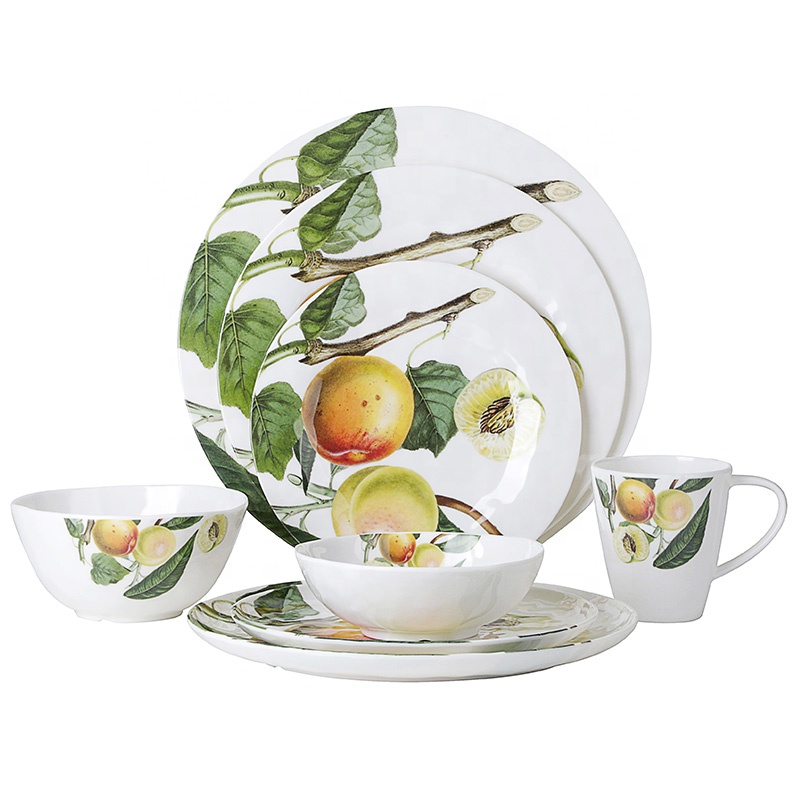
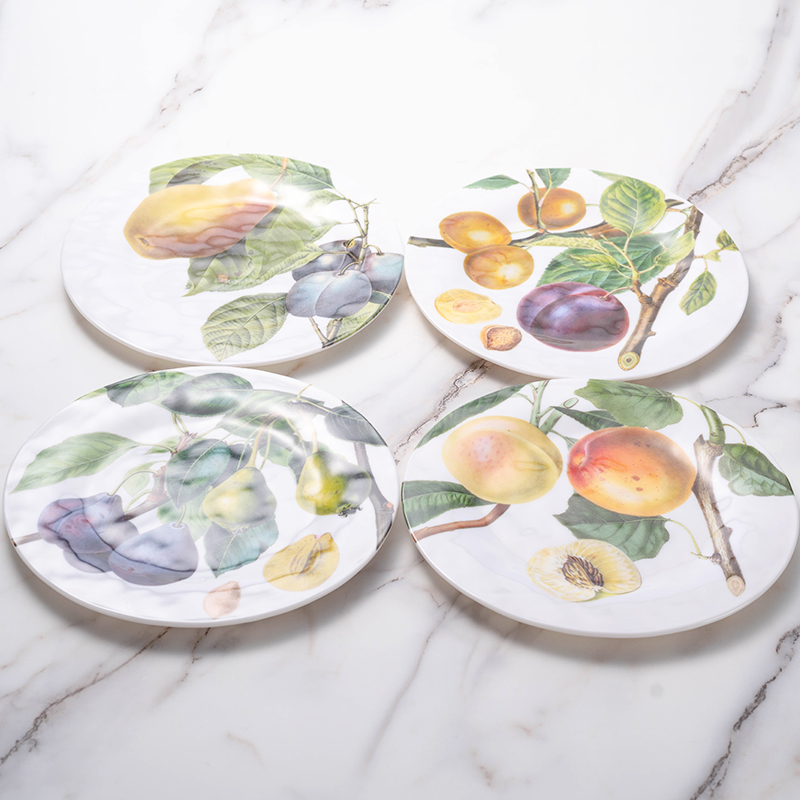
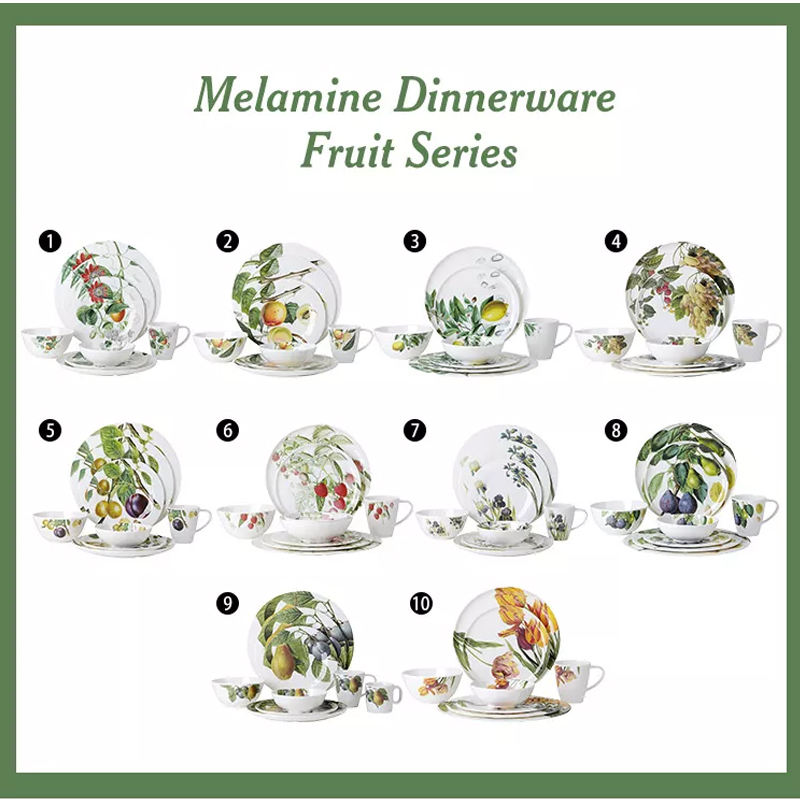
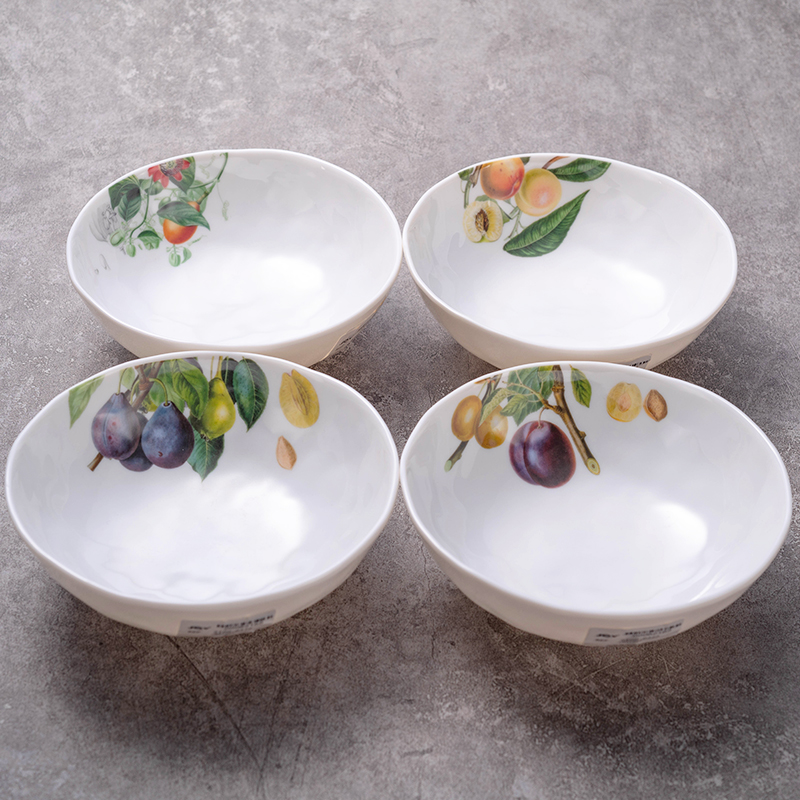




Melamine Tableware Wholesale & OEM Supply from China
At Broad Export, we help overseas importers, wholesalers, distributors, retailers and hospitality buyers source melamine tableware from China.
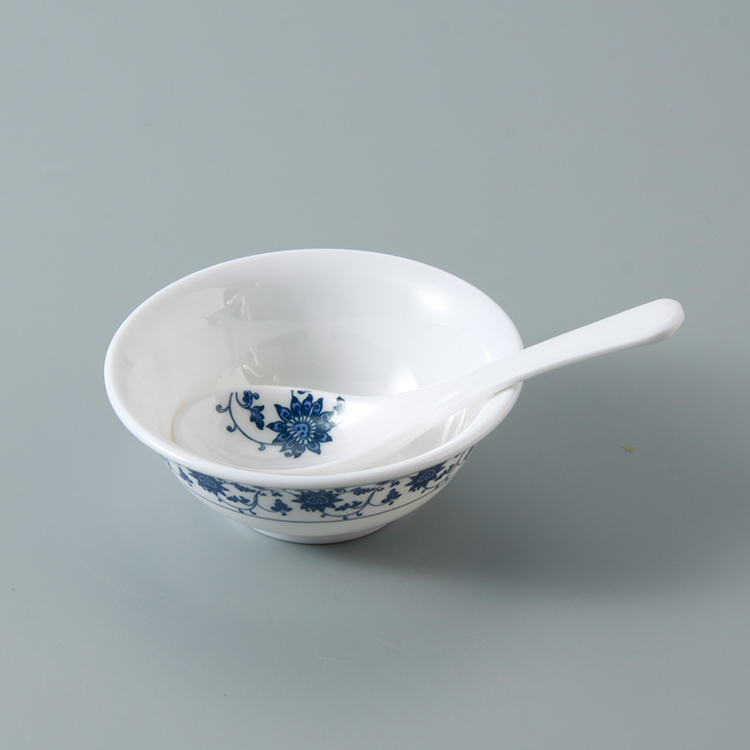
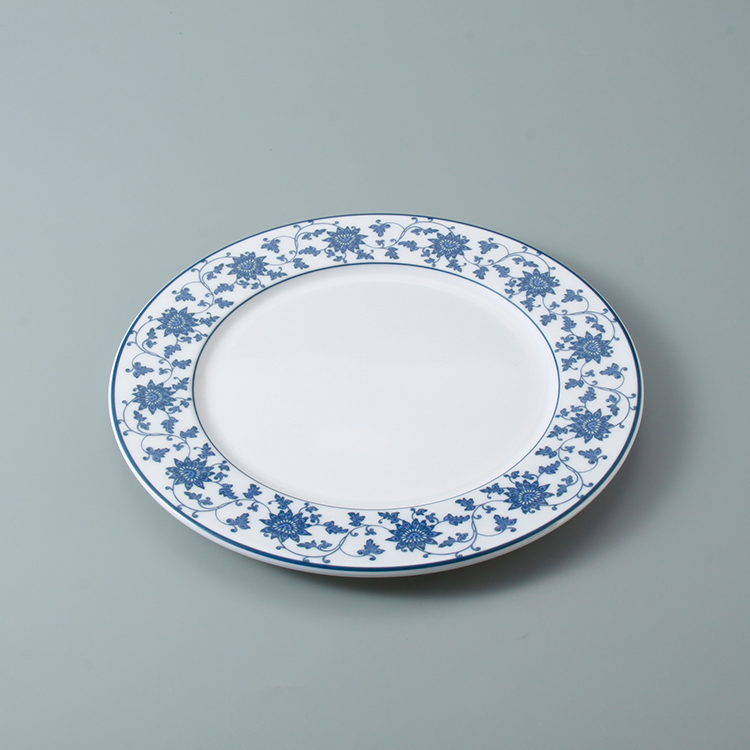
Our sourcing range covers melamine plates, bowls, trays, serving dishes, containers and coordinated dinnerware collections. We work with manufacturing partners to offer different colors, patterns, shapes and product styles for household, institutional and retail markets.
From simple white melamine dinnerware to colorful designs, Nordic-inspired collections and hotel serving products, we help buyers compare available designs, clarify material specifications and coordinate sourcing requirements.
Whether you are developing a retail collection, sourcing children’s dinnerware or looking for customized tableware for your market, we can discuss product selection, decoration, packaging and applicable food-contact requirements with our manufacturing partners.
Melamine Tableware at a Glance
| Specification | Description |
|---|---|
| Material | Melamine-formaldehyde resin (MFR) |
| Resin composition | Melamine and formaldehyde chemically reacted to form a thermosetting resin |
| Common filler | Cellulose or refined wood pulp |
| Manufacturing process | Molding under heat and pressure, followed by curing |
| Main characteristics | Hard, lightweight, rigid, smooth and shatter-resistant |
| Surface finish | Glossy or other finishes, depending on product design |
| Colors and patterns | White, black, colorful, printed and decorative styles |
| Product range | Plates, bowls, trays, serving dishes, containers and dinnerware sets |
| Customization | Colors, patterns, shapes, logos and packaging, subject to factory capabilities |
| Food-contact requirements | US FDA 21 CFR 177.1460 and applicable EU food-contact legislation |
| Migration testing | Melamine and formaldehyde migration testing |
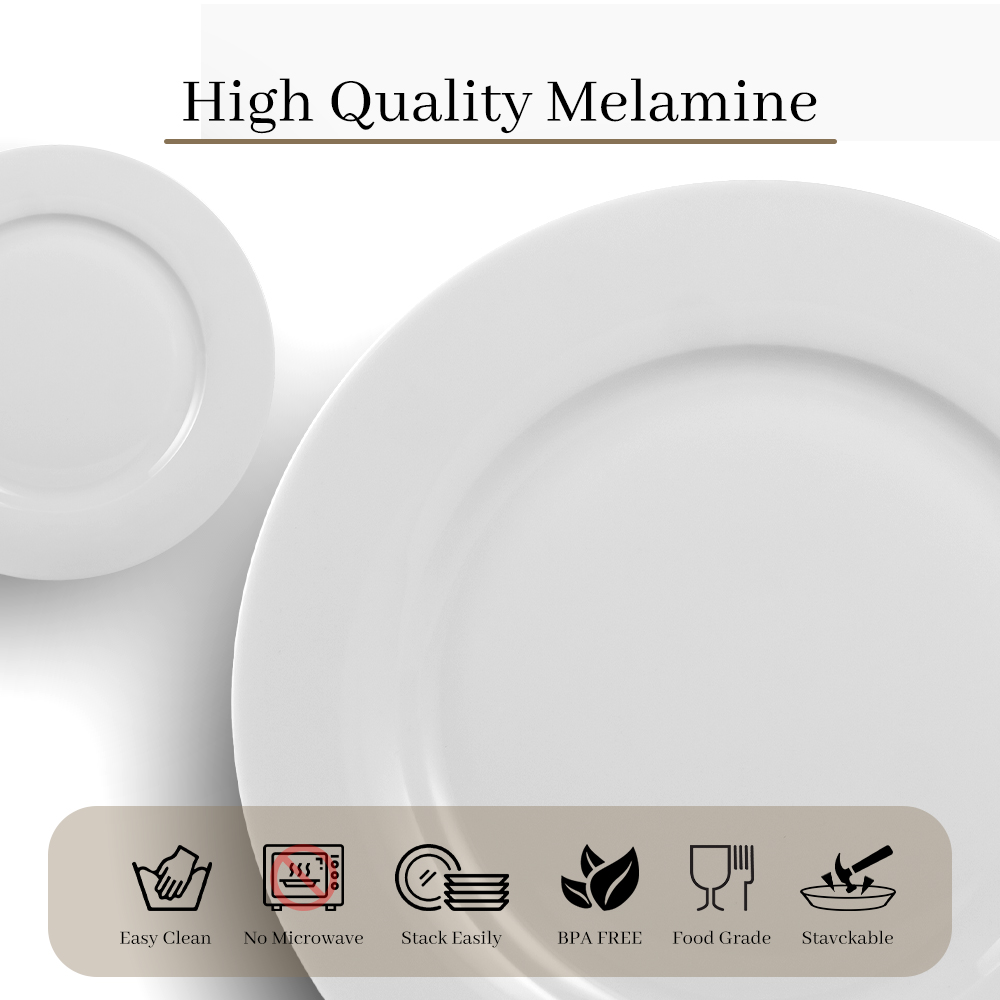
| Usage limitations | Not for microwave heating or cooking; hot-food suitability requires particular caution |
| MOQ and lead time | Confirmed according to product design, decoration and order quantity |
1. What Is Melamine Tableware?
Melamine tableware is made primarily from melamine-formaldehyde resin (MFR), a thermosetting plastic produced through a chemical reaction between melamine and formaldehyde.
Unlike ordinary thermoplastics, which may soften when reheated, melamine-formaldehyde resin forms a rigid, cross-linked structure during the curing process.
A suitable filler, commonly cellulose, is incorporated into the resin to help achieve the required mechanical properties and processing characteristics.
The resulting material is hard, relatively lightweight, water-resistant and resistant to ordinary impact and surface scratching. Its smooth surface and ability to accept different colors and decorative patterns make it a popular material for reusable tableware.
At Broad Export, we distinguish genuine melamine-formaldehyde tableware from other plastic products that may be marketed as melamine-style dinnerware. For buyers with specific food-contact requirements, the resin type, filler and finished-product composition should be confirmed by the manufacturer.
2. Melamine Tableware Material Composition
The composition of melamine tableware is an important factor in product quality, manufacturing consistency and food-contact compliance.
2.1 Melamine
Melamine is an organic chemical compound used as one of the main raw materials in the production of melamine-formaldehyde resin.
It reacts with formaldehyde to form the resin structure that gives finished tableware its hardness, rigidity and dimensional stability.
The quality and reaction characteristics of the resin influence the finished product’s physical properties and chemical migration performance.
2.2 Formaldehyde
Formaldehyde reacts with melamine during resin production to form the polymer structure.
It is therefore a starting material in the manufacturing process, rather than simply an ingredient added to finished tableware.
However, residual substances and possible migration from the finished resin must be controlled. This is why formaldehyde migration testing is particularly important for food-contact melamine products.
The total quantity of formaldehyde used during resin manufacture should not be confused with the amount that migrates from a finished tableware article into food.
2.3 Cellulose Filler
Cellulose is commonly incorporated into melamine-formaldehyde molding compounds.
It helps provide the material with suitable mechanical properties and contributes to the performance of the finished molded article.
US FDA regulation 21 CFR 177.1460 also specifies refined wood pulp as a permitted component in the melamine-formaldehyde resin formulation described by that regulation.
The actual filler type and formulation should be confirmed with the manufacturer.
2.4 Pigments, Colorants and Other Additives
Colorants and processing additives may be incorporated into the molding compound to achieve different product appearances and manufacturing characteristics.
Different pigment systems can be used to produce white, black, red, blue, green and other colorful tableware designs.
Colorants and other additives used in food-contact products must be appropriate for the applicable food-contact requirements.
2.5 A Note on Bamboo-Fiber Melamine Tableware
Some products have been marketed as bamboo tableware, bamboo cups or natural-fiber dinnerware.
However, products made by adding bamboo powder or bamboo fibers to melamine-formaldehyde resin are still plastic products; they are not equivalent to solid bamboo tableware.
Under the EU plastic food-contact rules, bamboo and other plant-based fillers are not authorized for use in these melamine plastic materials under Regulation (EU) No 10/2011.
The German Federal Institute for Risk Assessment (BfR) has also reported increased migration concerns and material instability in some bamboo-filled melamine products.
For buyers targeting the EU market, we recommend verifying the exact resin formulation and filler composition before placing an order.
3. Key Characteristics of Melamine Tableware
3.1 Hard and Rigid Structure
Melamine-formaldehyde resin develops a hard, rigid structure after the curing process.
This makes it suitable for reusable plates, bowls, serving dishes and other tableware products that require shape retention during normal use.
3.2 Lightweight Construction
Melamine tableware is relatively lightweight compared with many ceramic and glass alternatives of similar dimensions.
This can make handling, storage and transportation more convenient, particularly when purchasing large quantities of plates, bowls and serving products.
Weight is also an important consideration for buyers supplying institutional and catering markets.
3.3 Shatter Resistance
One of the main characteristics of melamine tableware is its resistance to ordinary impact and shattering.
Unlike conventional ceramic and glass products, melamine articles are less likely to break into sharp pieces when accidentally dropped during normal handling.
This characteristic makes melamine an option for environments where breakage and replacement costs are important considerations.
However, melamine tableware is not unbreakable. Strong impacts, excessive pressure, prolonged use and surface deterioration can still cause cracks, chips or other damage.
3.4 Water and Surface Resistance
Properly manufactured melamine-formaldehyde products generally have a hard, smooth and water-resistant surface.
The cured resin structure makes ordinary cleaning relatively easy and helps resist everyday surface wear.
However, this does not mean the material is completely resistant to scratches, abrasive cleaning or chemical degradation.
Repeated exposure to unsuitable temperatures and hot acidic foods can damage the resin surface.
3.5 Color and Design Flexibility
Melamine molding compounds can be produced in a variety of colors and decorative styles.
This gives buyers more flexibility when developing tableware collections for different retail markets, restaurant concepts and household preferences.
Possible appearances include:
-
Plain white and black.
-
Solid colors.
-
Two-tone and multicolor designs.
-
Printed patterns.
-
Floral and decorative designs.
-
Nordic-inspired styles.
-
Other customized designs, subject to availability.
3.6 Dimensional Stability
As a thermosetting resin, cured melamine-formaldehyde material maintains a relatively rigid structure under its intended conditions of use.
It does not behave like ordinary thermoplastics that soften and melt when repeatedly heated.
However, this should not be interpreted as suitability for cooking or exposure to high temperatures. High heat can cause chemical degradation and increased migration of residual substances.
4. Melamine Tableware Product Range
We help buyers explore different melamine tableware categories according to their preferred designs, applications and target markets.
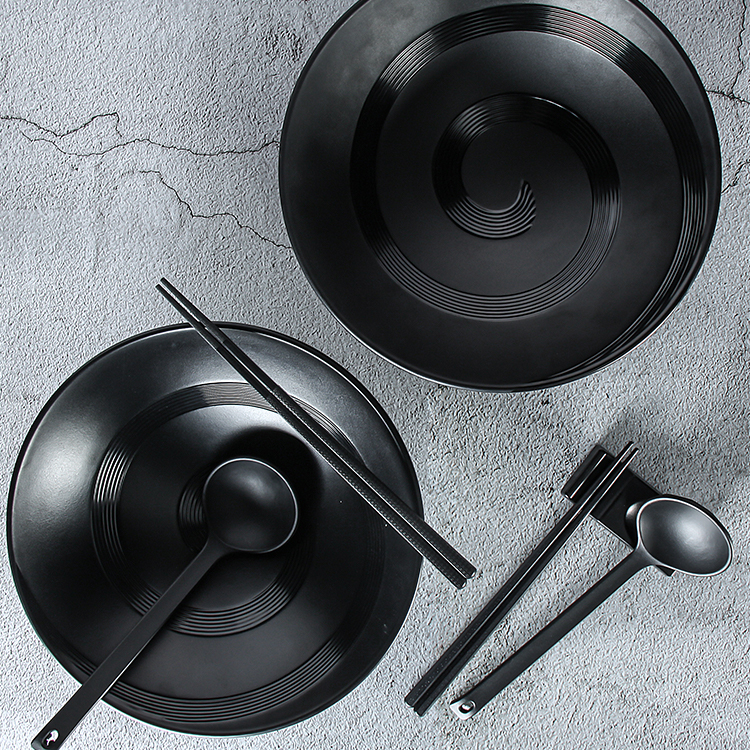
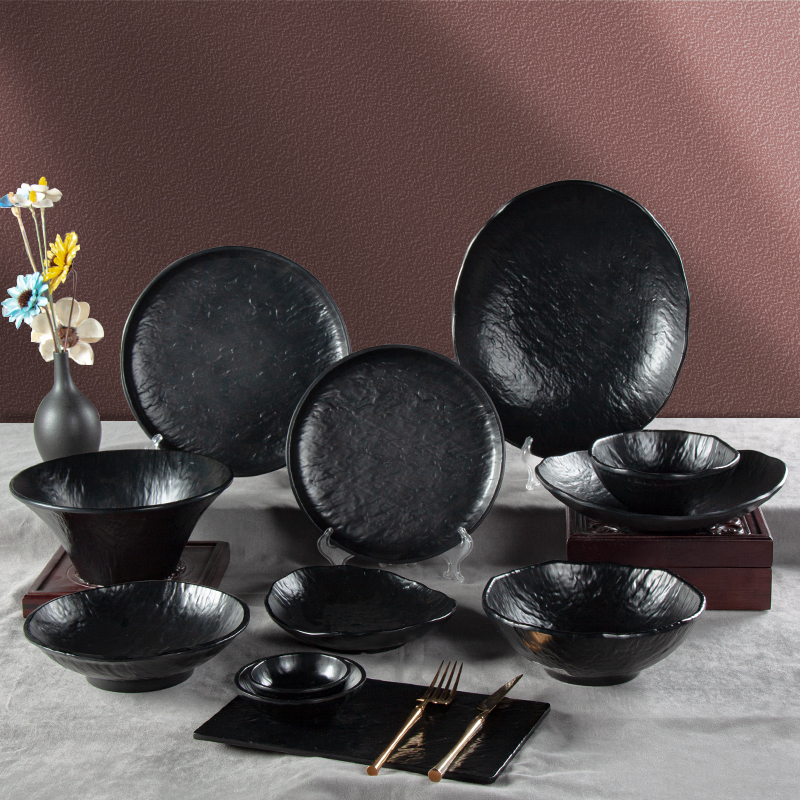
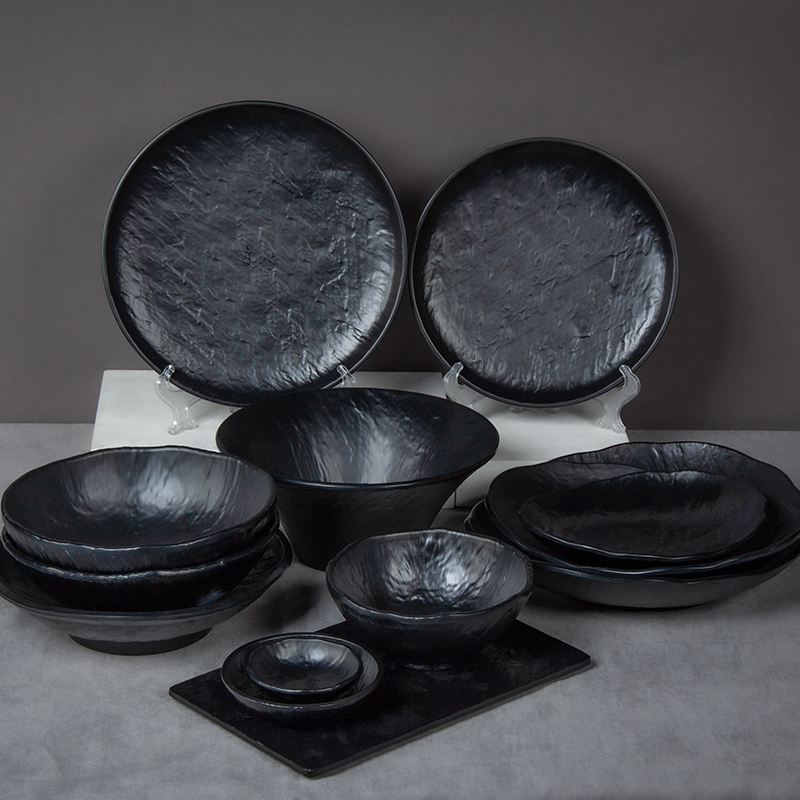
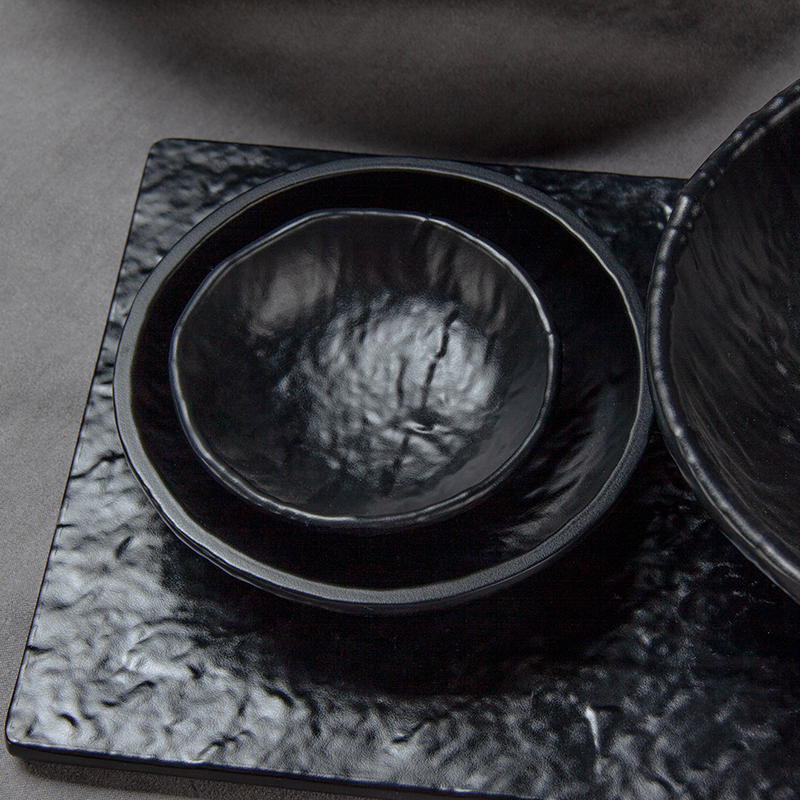
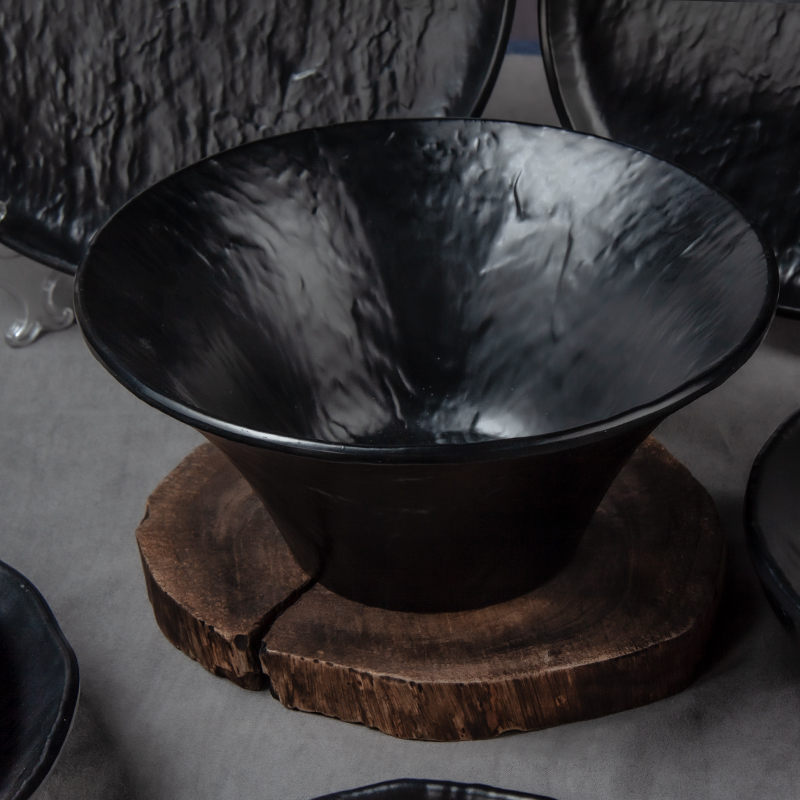
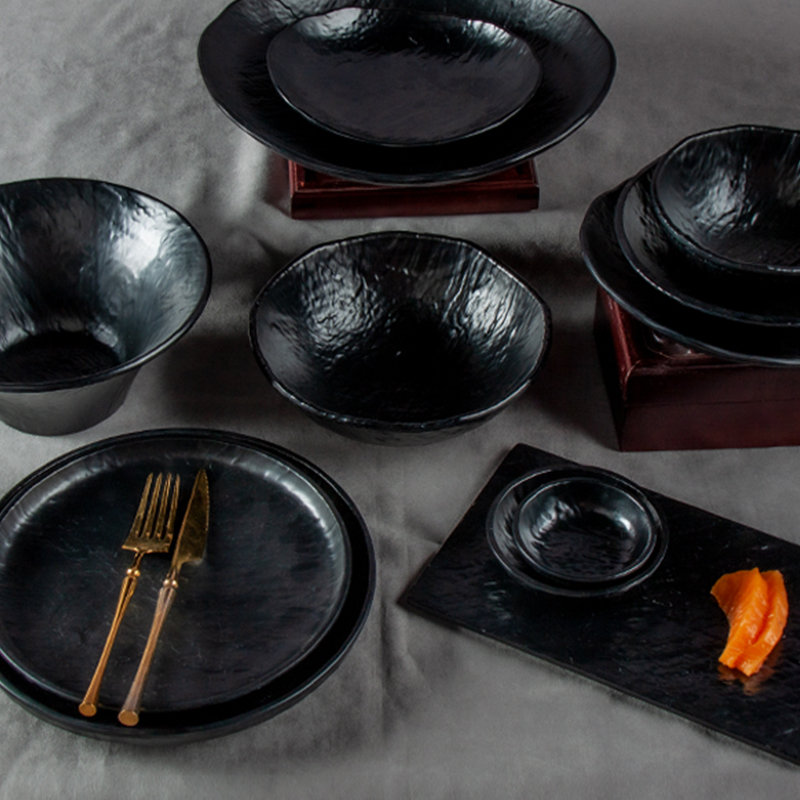
4.1 Black-Style Melamine Tableware
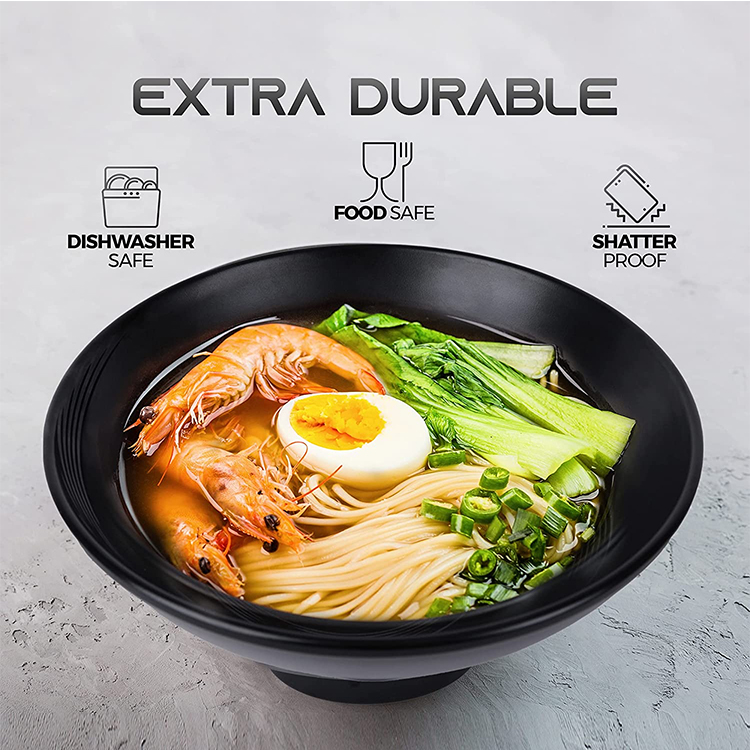
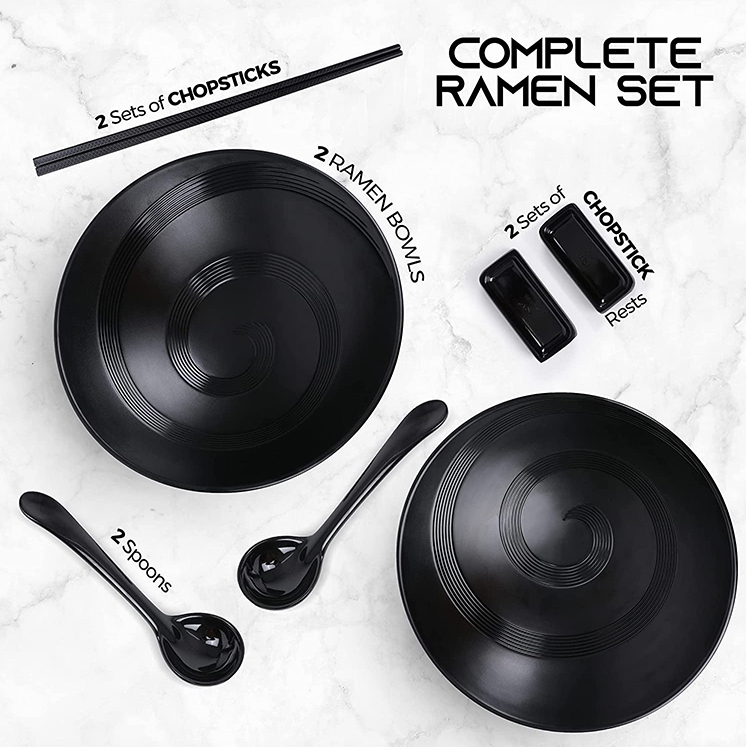
Black melamine tableware is often selected for contemporary dining presentations and professional food service settings.
Its dark appearance can create contrast with food presentations and complement modern restaurant interiors.
Available product types may include plates, bowls, serving dishes and other tableware pieces.
4.2 Colorful Melamine Tableware
Colorful melamine tableware offers a wide range of design choices for household dining, children’s product collections and retail distribution.
Different colors, patterns and decorative finishes can be considered when developing a coordinated product assortment.
4.3 Nordic-Style Melamine Tableware
Nordic-style melamine tableware generally features simple shapes, balanced colors and understated decorative elements.
These styles are suitable for buyers interested in contemporary household products, lifestyle retail collections and modern dining accessories.
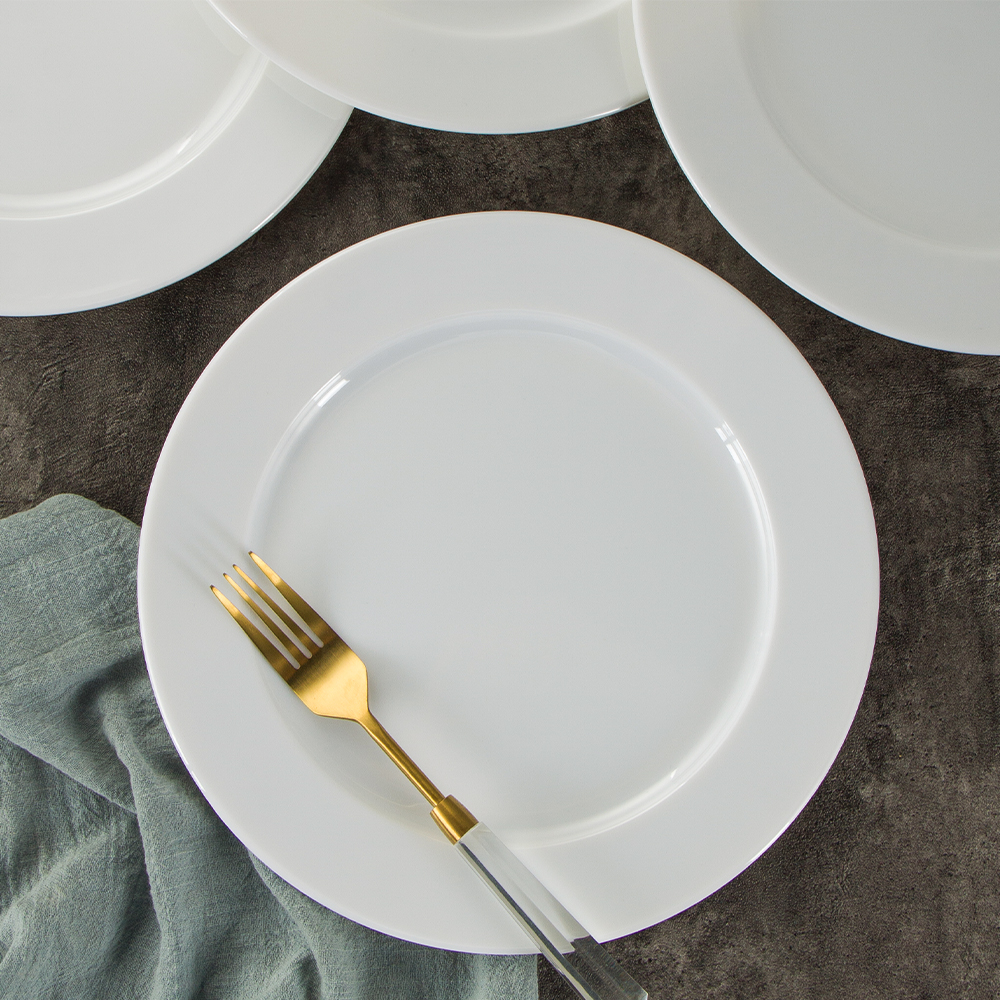
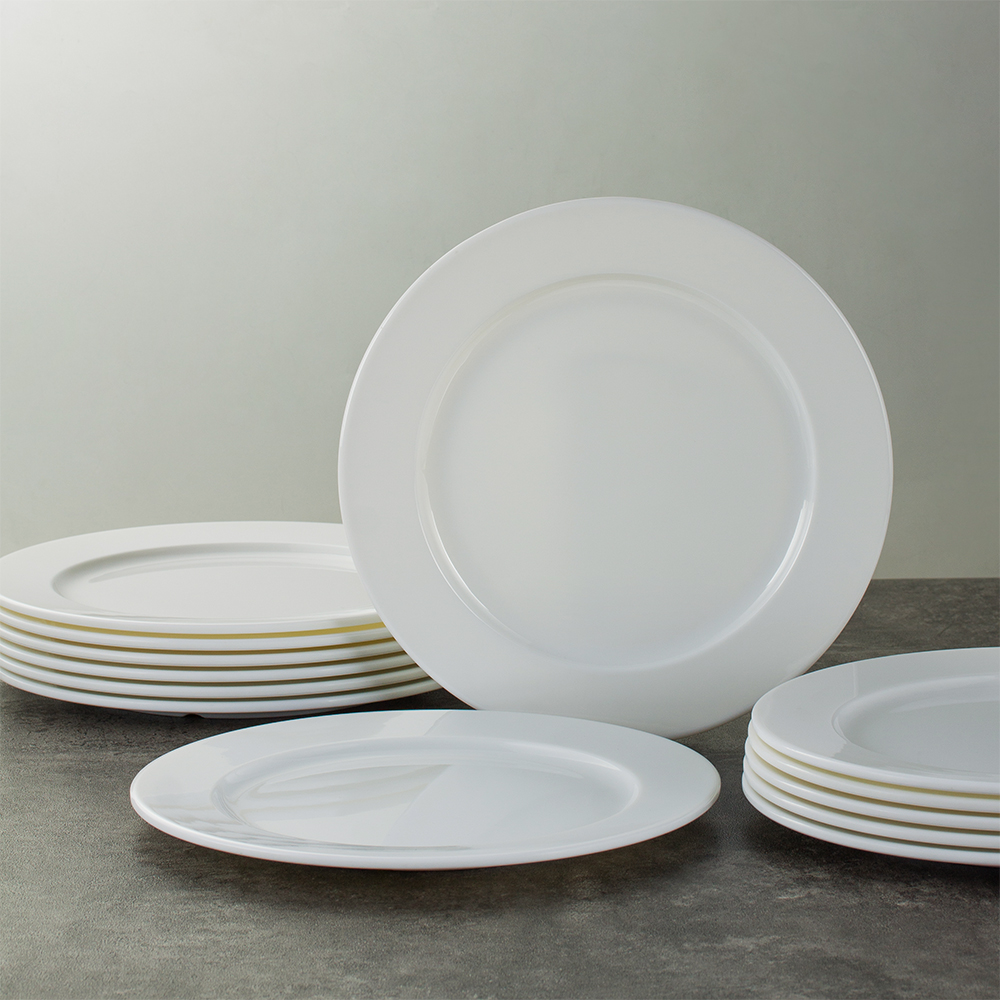
4.4 White Melamine Tableware
White melamine tableware provides a clean and simple appearance that can be coordinated with various dining environments.
Its neutral color makes it a flexible option for buyers looking for basic tableware collections and uniform product styles.
4.5 Other Melamine Tableware Designs
In addition to standard white, black, colorful and Nordic-style collections, other styles and decorative options can be explored according to the available product range.
This category gives importers and retailers more choices when developing differentiated product collections.
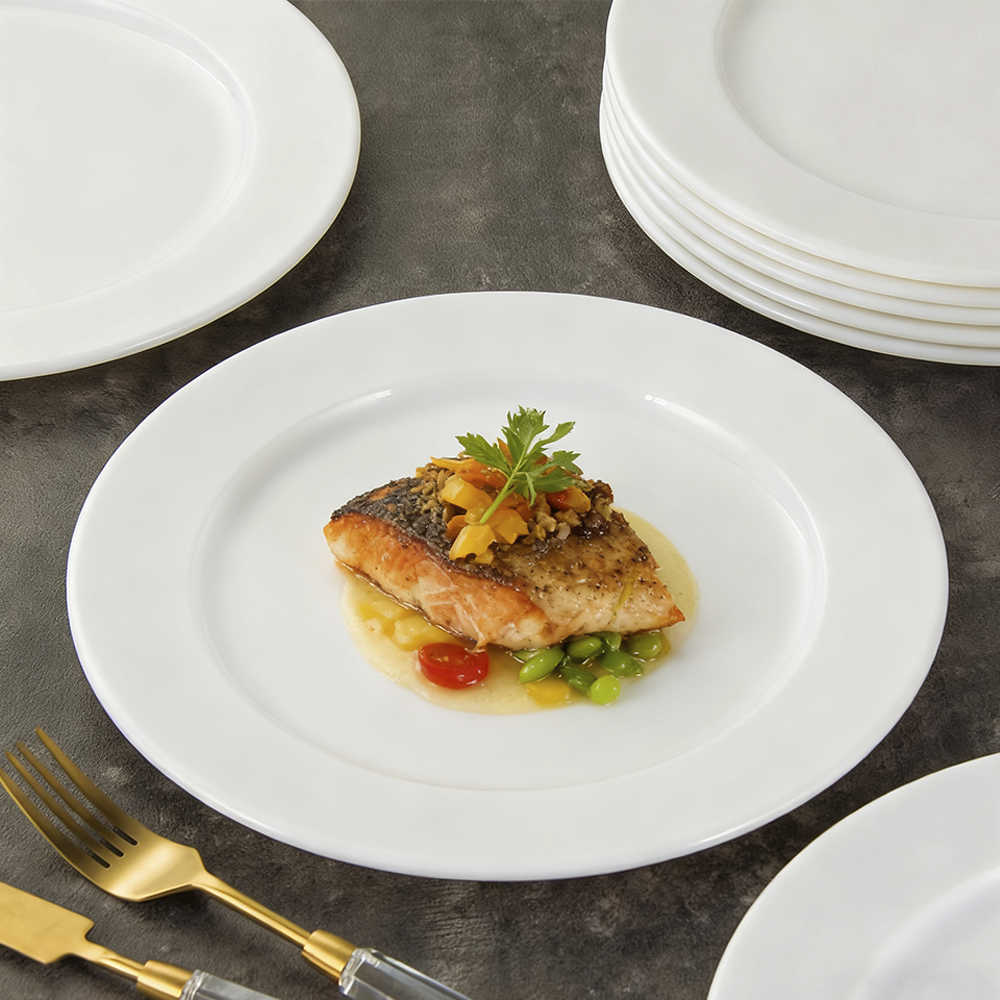
4.6 Hotel and Restaurant Serving Melamine Tableware
This collection focuses on serving-oriented products for institutional and hospitality purchasing.
Product options may include serving plates, bowls, trays and other food presentation accessories.
For buyers considering melamine tableware for professional food service, intended serving temperatures and destination-market safety guidance must be reviewed carefully. Conventional melamine-formaldehyde products should not be assumed suitable for hot-food service.
4.7 Melamine Containers
Melamine containers come in different shapes and sizes for various storage and serving-related applications.
For buyers developing container ranges, important considerations include product dimensions, lid design where applicable, intended food contact, storage conditions and packaging.
4.8 Children’s Melamine Dinnerware Sets
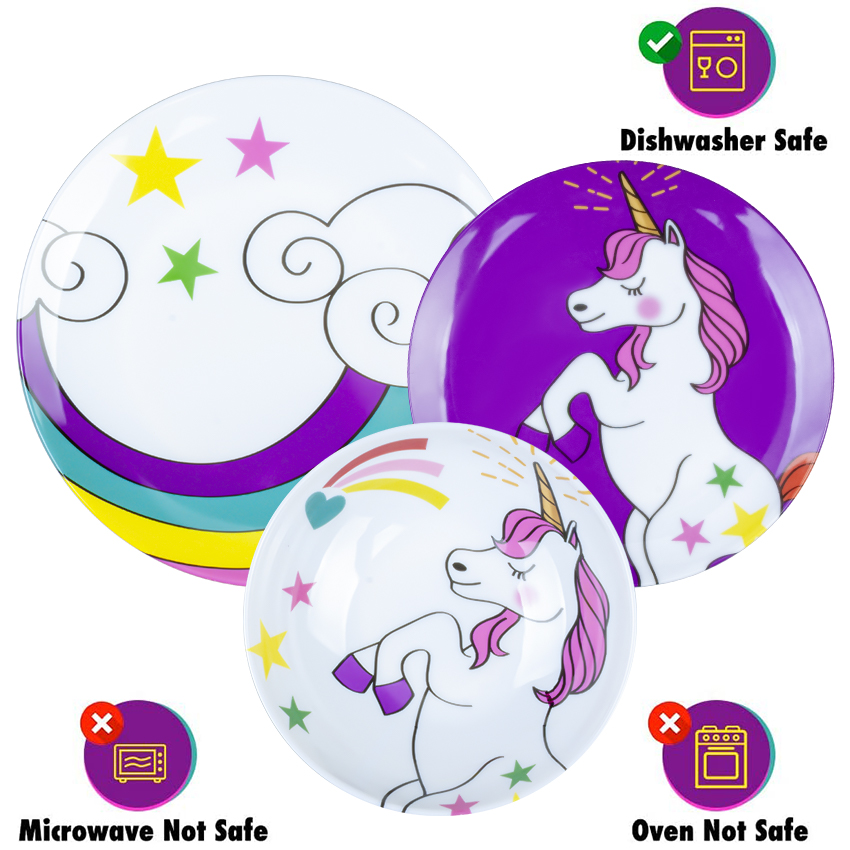
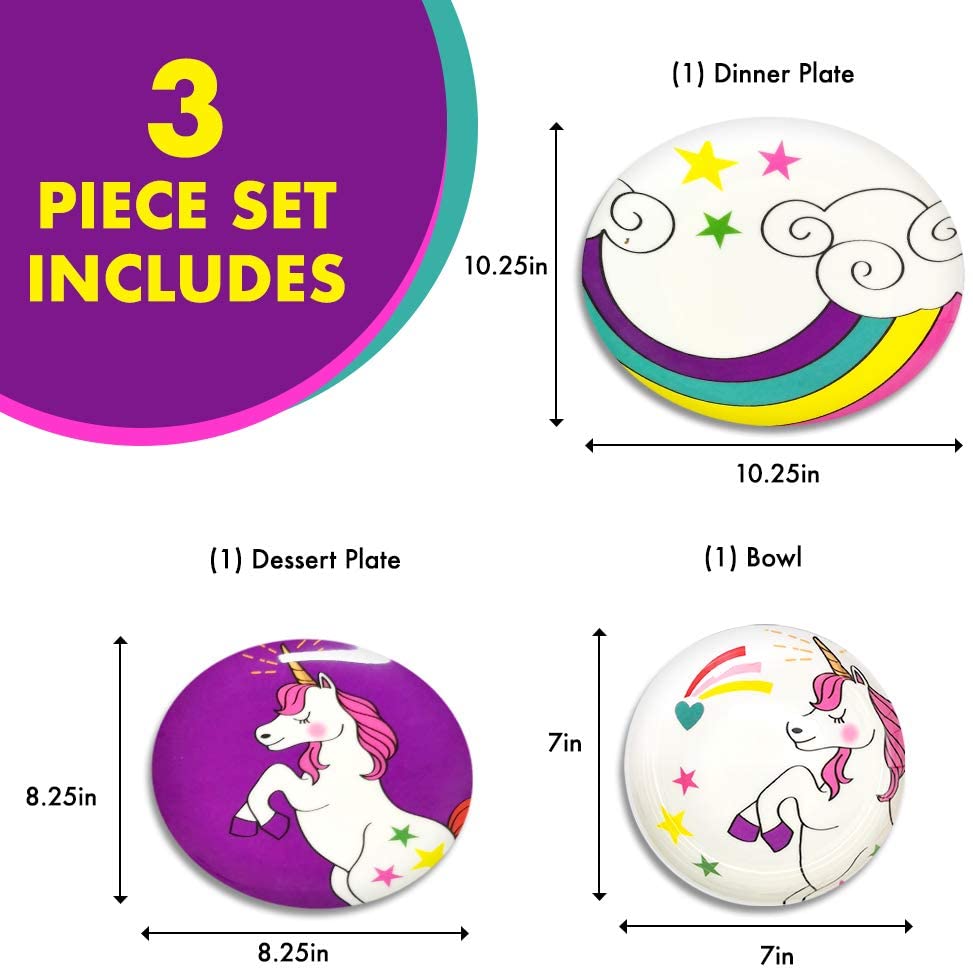
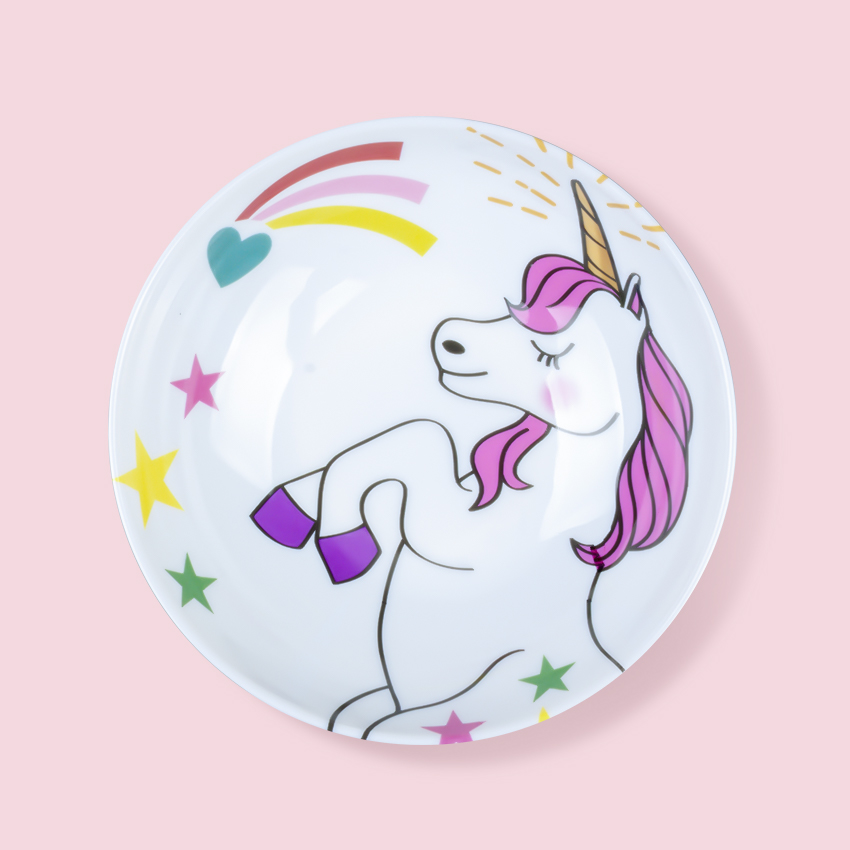
Children’s melamine dinnerware sets may include plates, bowls, cups and coordinated dining pieces in different colors and patterns.
When sourcing children’s tableware, buyers should pay particular attention to material composition, food-contact testing, age suitability, product dimensions and surface quality.
The fact that melamine is relatively shatter-resistant does not automatically mean that a product is suitable for every infant or children’s feeding application. In particular, it should not be used for preparing or serving hot infant formula under the BfR’s current guidance.
5. US and EU Food Contact Safety Requirements
Food-contact compliance is one of the most important considerations when sourcing melamine tableware for overseas markets.
Because melamine-formaldehyde is a plastic material, its compliance requirements differ from those applicable to porcelain and other ceramic tableware.
The finished article must be evaluated for the migration of relevant substances, including melamine and formaldehyde.
5.1 United States: FDA Requirements
The relevant US food-contact regulation for molded melamine-formaldehyde articles is:
21 CFR 177.1460 — Melamine-Formaldehyde Resins in Molded Articles
This regulation permits melamine-formaldehyde resins to be used as food-contact surfaces in molded articles subject to the prescribed conditions.
Key provisions include:
-
The resin is produced by reacting one mole of melamine with not more than three moles of formaldehyde in aqueous solution.
-
Refined wood pulp may be used as a filler.
-
Certain additional substances, including permitted colorants and processing additives, are subject to specified conditions.
-
Finished molded articles must meet the prescribed extractives requirement under the relevant test conditions.
The regulation specifies that net chloroform-soluble extractives must not exceed 0.5 mg per square inch of food-contact surface when tested under the applicable conditions.
FDA Guidance on Melamine Tableware
The FDA also provides consumer guidance concerning melamine tableware.
According to the FDA:
-
Melamine-based dinnerware should not be used to heat food or beverages in microwave ovens.
-
Highly acidic foods exposed to high temperatures can increase melamine migration.
-
The FDA discusses increased migration under exaggerated test conditions involving highly acidic food held at approximately 160°F (71°C) or higher for two hours.
The 160°F figure is a test condition highlighted by the FDA, not a universal maximum operating temperature for every melamine product.
Important for Importers
Compliance with 21 CFR 177.1460 does not mean that every melamine tableware product is automatically FDA-approved.
The finished product’s materials, formulation, food-contact surface and applicable testing documentation must be evaluated.
5.2 European Union: Food Contact Material Regulations
Melamine tableware intended for the EU market is subject to the applicable food-contact material requirements.
The key regulations include:
Regulation (EC) No 1935/2004
Establishes the general safety requirements for food-contact materials.
Materials must not transfer their constituents into food at levels that could endanger human health or cause unacceptable changes in food composition, taste or odour.
Regulation (EC) No 2023/2006
Establishes Good Manufacturing Practice requirements for food-contact materials.
Commission Regulation (EU) No 10/2011
Sets out specific requirements for plastic food-contact materials, including composition rules, restrictions on substances and migration requirements.
According to the current BfR summary of the EU specific migration limits:
| Substance | Specific Migration Limit |
|---|---|
| Melamine | 2.5 mg/kg food |
| Formaldehyde | 15 mg/kg food |
These are substance migration limits, not percentages of material composition.
Finished products must be evaluated under the applicable testing conditions for their intended use.
5.3 Special EU Import Requirements for Melamine Kitchenware from China
Commission Regulation (EU) No 284/2011 establishes specific import procedures for polyamide and melamine plastic kitchenware originating or consigned from China and Hong Kong.
For melamine kitchenware, the requirements include:
-
Prior notification to the competent authority at the first point of introduction at least two working days before the estimated physical arrival.
-
A consignment declaration.
-
A laboratory report demonstrating that formaldehyde release does not exceed 15 mg/kg food or food simulant.
The EU importer or its representative is responsible for the applicable import notification and entry procedures.
For sourcing projects, we can coordinate with manufacturing partners regarding the product information, shipment identification and supporting laboratory documentation available for the relevant consignment.
5.4 Recommended Compliance Documentation
Before confirming melamine tableware orders, importers should request and review the following documents where applicable:
-
Material composition declaration.
-
Melamine migration test report.
-
Formaldehyde migration test report.
-
Finished-product food-contact test report.
-
Colorant and filler specifications.
-
Product identification and technical specifications.
-
Relevant Declaration of Compliance.
-
Shipment-specific documentation required under EU Regulation 284/2011.
Test reports should correspond to the actual finished product and relevant colors or decorative variations.
A generic certificate or report for a different product should not be treated as sufficient evidence for all items in a collection.
6. Temperature Resistance and Proper Use of Melamine Tableware
One important distinction when purchasing melamine tableware is the difference between heat resistance during material processing and suitability for food contact at elevated temperatures.
Melamine-formaldehyde resin is cured under heat and pressure during manufacturing. However, this does not mean that finished melamine tableware is suitable for cooking, microwave heating or serving hot foods.
High temperatures can accelerate the degradation of the resin and increase the migration of melamine and formaldehyde into food.
6.1 Microwave Oven
Melamine tableware should not be used to heat food or beverages in a microwave oven.
The FDA specifically advises against heating food on melamine-based dinnerware.
The BfR also recommends that melamine-formaldehyde resin articles should not be used for microwave heating.
For microwave applications, buyers should choose products made from materials specifically designed and tested for microwave use.
6.2 Hot Food and Beverages
This is an important point for hospitality and restaurant buyers.
The BfR’s updated guidance dated 17 July 2026 recommends that melamine-formaldehyde resin tableware should not come into contact with hot food, including hot drinks such as tea and coffee, soup and other hot liquids.
The FDA separately highlights that migration can increase when highly acidic food is exposed to high temperatures.
For this reason, we do not recommend presenting conventional melamine-formaldehyde tableware as suitable for unrestricted hot-food or hot-beverage service.
Buyers should carefully assess the applicable food-contact requirements and risk-management guidance in their destination market.
6.3 Oven, Grill and Stovetop
Melamine tableware is not cookware.
It should not be used for:
-
Conventional oven heating.
-
Microwave heating.
-
Direct flame or stovetop cooking.
-
Grilling or broiling.
-
Frying or heating food directly in the article.
The material is designed for molded tableware applications, not direct cooking or heating.
6.4 Dishwasher Cleaning
Dishwasher suitability should be confirmed for each product and manufacturing formulation.
Important factors include:
-
Washing temperature.
-
Detergent type and concentration.
-
Washing duration.
-
Number of repeated washing cycles.
-
Surface gloss and decorative finish.
-
Evidence of material wear after repeated cleaning.
We recommend requesting appropriate dishwasher durability information before specifying melamine products as dishwasher-safe, particularly for commercial catering applications.
Do not assume that every melamine article is suitable for high-temperature commercial dishwashing.
6.5 Freezer and Low-Temperature Storage
Freezer suitability should also be confirmed by the manufacturer for the selected product.
Do not assume that all melamine plates, bowls and containers are designed for prolonged freezer storage or repeated temperature cycling.
Follow the product’s stated storage conditions and avoid sudden extreme temperature changes.
6.6 Acidic Foods
Acidic foods are an important consideration when selecting melamine tableware.
The BfR reports that prolonged contact with hot acidic foods can attack and degrade melamine-formaldehyde resin.
Examples include:
-
Hot tomato-based sauces.
-
Hot acidic fruit preparations.
-
Hot sauerkraut.
-
Other hot acidic food products.
Particular care should be taken with products intended for repeated food service applications.
6.7 Scratches, Surface Damage and Breakage
Although melamine tableware is relatively resistant to ordinary impact and surface wear, it can still deteriorate over time.
Important signs of damage include:
-
Loss of surface gloss.
-
Deep scratches.
-
Cracks or chips.
-
Discoloration.
-
Surface roughness.
-
Visible deterioration of the molded surface.
BfR notes that surface damage can accelerate the degradation of melamine-formaldehyde resin.
Damaged or visibly deteriorated tableware should be removed from food-service use and replaced.
Avoid abrasive cleaning pads and harsh cleaning methods that may damage the surface.
7. Quality Inspection, Product Selection and Export Packaging
When sourcing melamine tableware, buyers should consider both appearance and material performance.
A product may have an attractive design but still require additional evaluation of its formulation, surface quality and migration results.
7.1 Product Quality Inspection
For melamine tableware sourcing projects, we recommend considering the following inspection points:
Material and Surface
-
Resin and filler identification.
-
Uniformity of surface finish.
-
Surface gloss and smoothness.
-
Visible scratches, cracks and damage.
-
Color consistency.
Dimensions and Molding Quality
-
Product length, width and height.
-
Weight and thickness.
-
Shape consistency.
-
Rim and edge uniformity.
-
Warping or deformation.
-
Excess molding flash or rough edges.
Decoration
-
Printing and pattern alignment.
-
Color consistency.
-
Surface decoration quality.
-
Logo and custom branding accuracy.
Food-Contact Documentation
-
Melamine migration results.
-
Formaldehyde migration results.
-
Product and formulation identification.
-
Destination-market compliance documentation.
Inspection criteria and sampling levels should be agreed upon with the supplier before production or shipment.
7.2 Export Packaging
Melamine tableware is more resistant to impact than conventional ceramic and glass products, but suitable packaging remains important for export transportation.
Depending on the product type and buyer’s requirements, packaging options may include:
-
Individual plastic bags or protective wrapping.
-
Paper or cardboard separators.
-
Inner boxes and gift boxes.
-
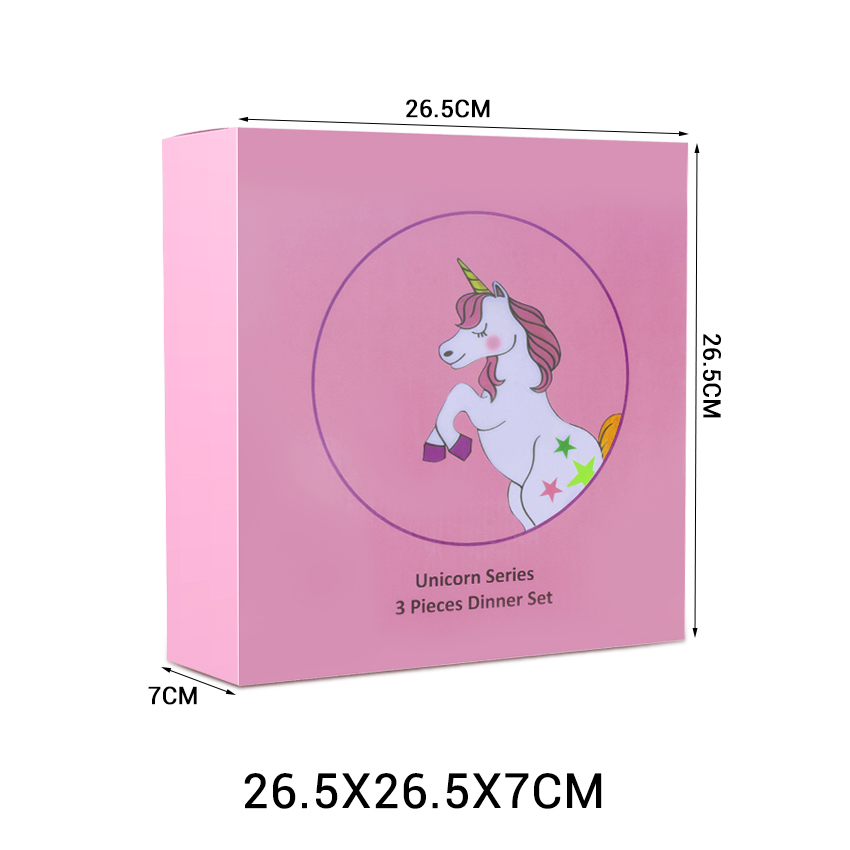
Retail packaging.
-
Corrugated export cartons.
-
Protective dividers for nested plates and bowls.
-
Palletized export packing where required.
Packaging specifications should take into account product dimensions, stacking arrangements, carton weight and the expected shipping conditions.
7.3 Export Documentation
Depending on the destination market and purchase arrangement, relevant export and product documents may include:
-
Commercial invoice.
-
Packing list.
-
Certificate of origin, where applicable.
-
Product specifications.
-
Material composition declaration.
-
Food-contact migration reports.
-
Declaration of Compliance, where applicable.
-
Shipment-specific documents required by the importing authority.
For EU melamine kitchenware shipments from China, the importer should also arrange the required consignment declaration, laboratory report and advance notification under Regulation (EU) No 284/2011.
8. Frequently Asked Questions About Melamine Tableware
Q1. What is melamine tableware made of?
Melamine tableware is generally manufactured from melamine-formaldehyde resin, a thermosetting plastic created by reacting melamine with formaldehyde.
Cellulose or refined wood pulp is commonly added as a filler, together with permitted colorants and other processing additives.
Q2. Is melamine tableware real plastic?
Yes. Melamine-formaldehyde tableware is a thermosetting plastic product.
Although it can have a smooth, glossy surface resembling ceramic or porcelain, its material structure and manufacturing process are different.
Q3. Is melamine tableware unbreakable?
No. Melamine tableware is relatively shatter-resistant compared with conventional ceramic and glass products.
However, strong impacts, repeated stress and surface deterioration can still cause cracks, chips or breakage.
Q4. Can melamine plates be used in a microwave?
No. Conventional melamine-formaldehyde tableware should not be used to heat food or beverages in a microwave oven.
Both the FDA and BfR provide guidance against microwave heating with melamine-based dinnerware.
Q5. Can melamine tableware hold hot soup, coffee or tea?
The BfR’s current recommendation is that melamine-formaldehyde articles should not come into contact with hot food or hot liquids, including soup, tea and coffee.
Buyers should take this guidance into account when selecting tableware for food-service applications.
Q6. What temperature can melamine tableware withstand?
There is no single universal safe food-contact temperature that applies to all melamine tableware products.
The temperature at which the finished article performs satisfactorily depends on its resin formulation, curing quality, product design and intended application.
The manufacturing curing temperature must not be confused with a safe serving temperature.
Q7. Is melamine tableware dishwasher-safe?
Some products may be designed and tested for dishwasher cleaning, but this should not be assumed for every item.
Buyers should request product-specific dishwasher durability information and confirm the recommended washing conditions.
Q8. Can melamine tableware be used for acidic foods?
Food acidity can influence the migration and degradation behavior of melamine-formaldehyde resin.
Particular caution is needed with hot acidic foods, such as tomato-based sauces and other acidic preparations.
Q9. Is melamine tableware suitable for children?
Melamine products are relatively shatter-resistant and are available in different children’s tableware designs.
However, children’s tableware must meet the applicable food-contact and product safety requirements. Buyers should also consider age suitability, dimensions, surface quality and intended food temperature.
It should not be assumed suitable for hot infant formula or hot-food feeding applications.
Q10. What is the difference between melamine tableware and bamboo tableware?
Conventional melamine tableware is made from melamine-formaldehyde resin, usually with fillers such as cellulose.
Some products marketed as bamboo tableware are actually melamine-formaldehyde plastic products containing bamboo fibers or powder.
These are not the same as articles made entirely from bamboo.
Bamboo and other plant-based fillers are not authorized under the EU plastic food-contact rules for these melamine resin materials.
Q11. Does melamine tableware release formaldehyde?
Melamine-formaldehyde resin uses formaldehyde during manufacturing.
Residual substances and migration from the finished product must be controlled in accordance with applicable food-contact requirements.
A suitable formaldehyde migration test is therefore an important part of evaluating the finished article.
Q12. What should importers check when purchasing melamine tableware from China?
Importers should review:
-
Material and filler composition.
-
Product dimensions and weight.
-
Surface finish and color consistency.
-
Melamine and formaldehyde migration test results.
-
US or EU food-contact requirements.
-
Intended use and temperature limitations.
-
Packaging specifications.
-
MOQ, production lead time and customization possibilities.
The destination country and intended food-contact conditions should be identified before finalizing the product specification.
9. Source Melamine Tableware from China with Broad Export
At Broad Export, we help overseas buyers explore melamine tableware sourcing options from China.
Our product range includes different colors, styles and tableware categories, from basic dinnerware collections to serving products and customized designs.
We work with manufacturing partners to coordinate product specifications, decoration requirements, packaging and relevant food-contact documentation.
For a sourcing enquiry, please provide the following information:
-
Preferred product categories, such as plates, bowls, trays or containers.
-
Preferred colors, patterns and designs.
-
Estimated order quantity.
-
Intended application and food-contact conditions.
-
Destination country and applicable compliance requirements.
-
Custom logo, decoration and packaging requirements.
-
Required migration test reports and supporting documents.
We will review the requirements and discuss available manufacturing and sourcing options.